

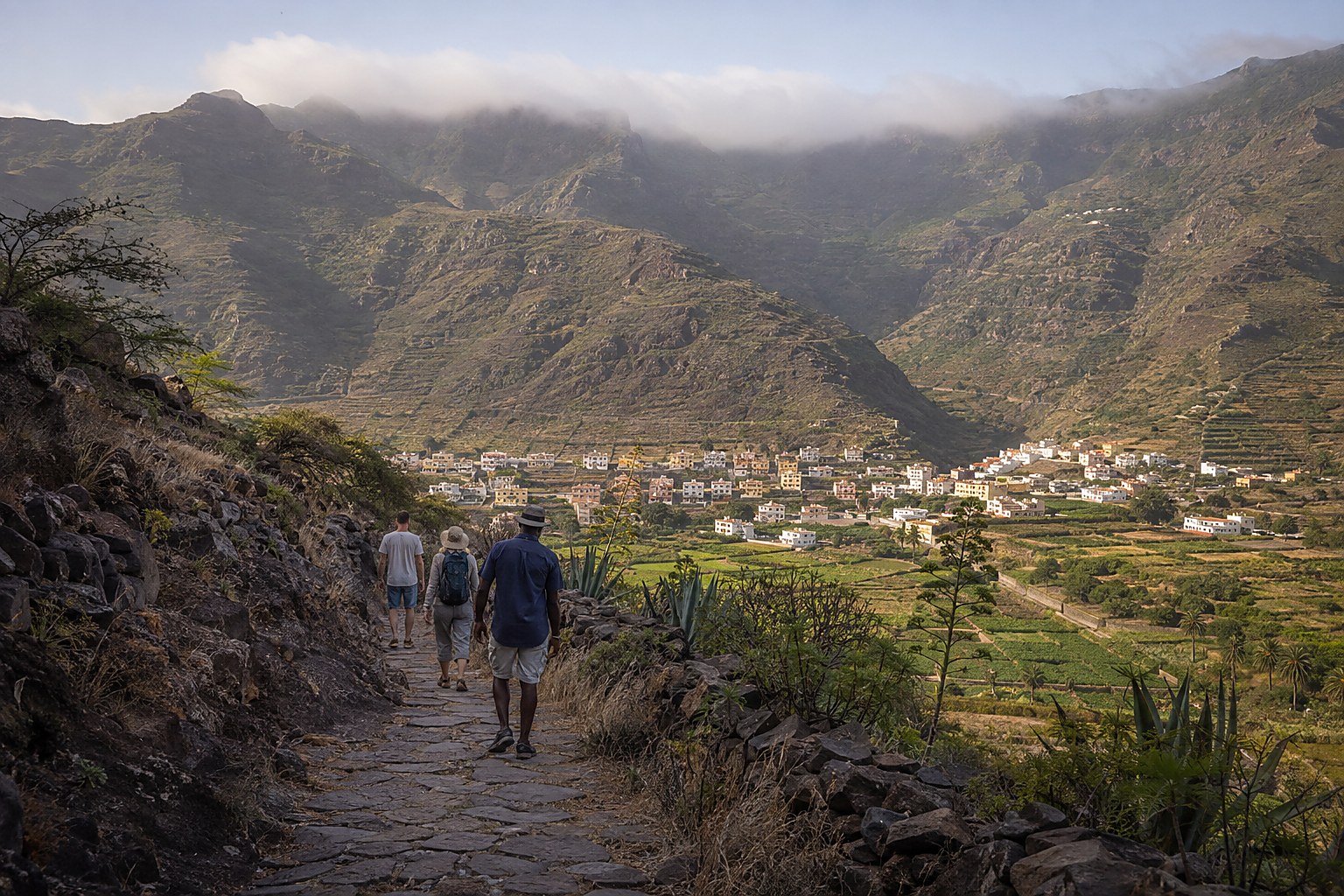
Quieter Islands
São Nicolau & Brava
Green valleys, remote villages, heritage and a slower introduction to lesser-visited islands.
São Nicolau
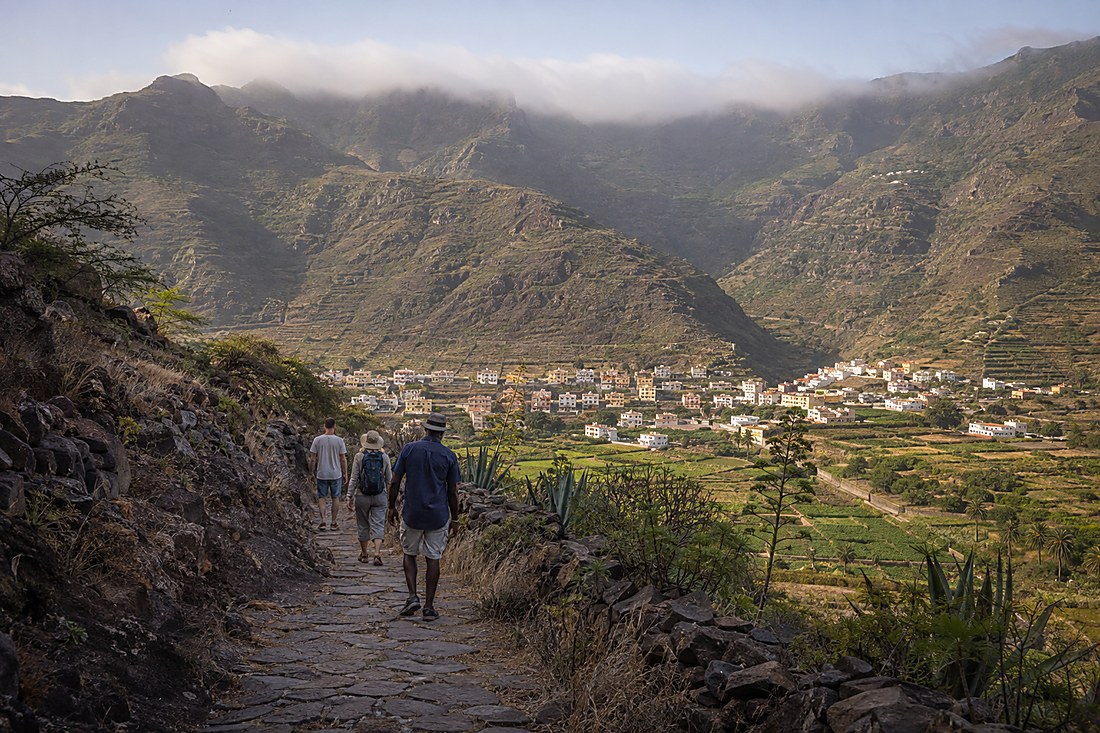
Quiet Mountains & HeritageSão Nicolau receives a fraction of the visitors its landscape might suggest, and that is much of the appeal. Long, narrow and mountainous, it holds an old seminary town, a natural park of cloud-fed forest, and a coastline of small harbours and lava rock. Life moves at its own speed. For travellers who already know the better-known islands — or who simply prefer quiet — it is often the stop they remember most clearly.
Why go
What the island actually offers
Ribeira Brava, set in a valley slightly inland, is among the archipelago's most characterful small towns: narrow streets, a church square, and a strong literary and musical tradition. Above it, Monte Gordo Natural Park protects the island's high ground, where frequent cloud and relatively high rainfall support forest and endemic plants. The coast offers a different mood again — the fishing settlement at Tarrafal, the inlet at Porto da Preguiça, and the sea-worn volcanic rock and pools at Juncalinho.
Signature experiences
Four ways we would shape your days
- Walk the streets and square of Ribeira Brava at an unhurried pace.
- Hike in Monte Gordo Natural Park, through cloud-fed forest.
- Follow the coast road to Tarrafal and Porto da Preguiça.
- See the lava rock formations and natural pools at Juncalinho.
The Atlas & Aura perspective
São Nicolau is a considered addition rather than an automatic one. It asks for a little more planning and a little more time, and it repays both. We tend to suggest it to travellers on a second visit to Cape Verde, or to anyone whose first priority is quiet.
Suggested stay — 3–5 nights suits the island's pace. Less than three tends to feel rushed.
Brava
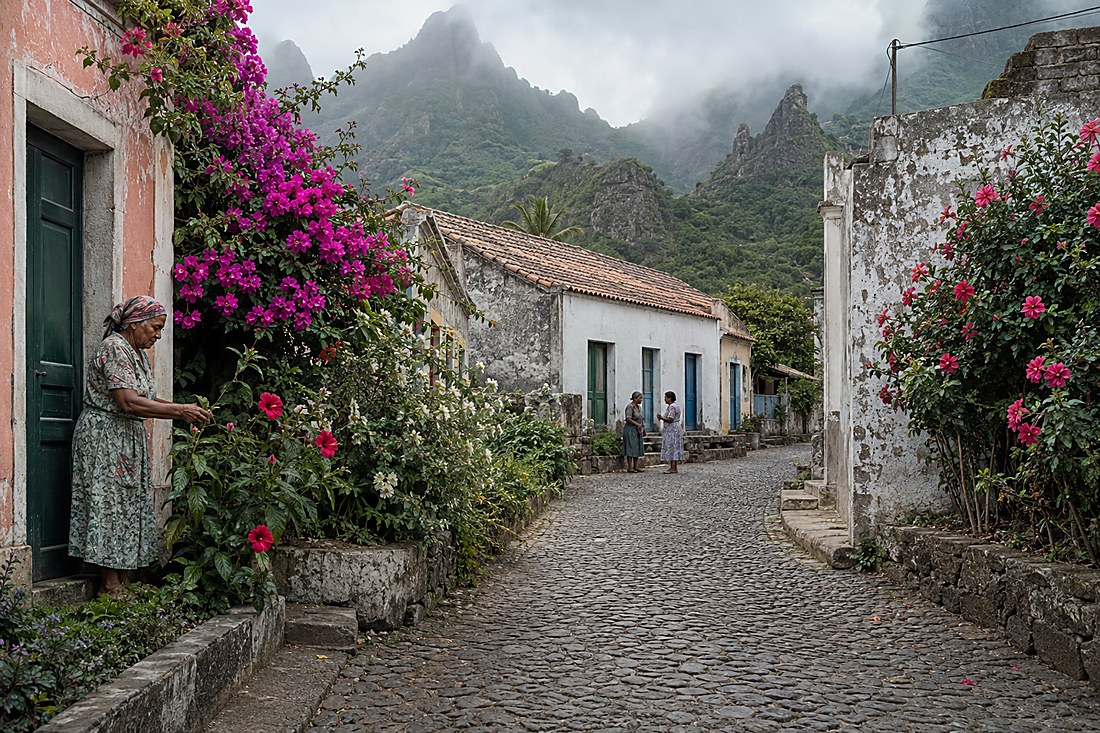
Flowers, Mist & Slow TravelThe smallest inhabited island, and the hardest to reach. Brava is high, green and often under cloud — stone-walled gardens, hydrangeas and bougainvillea, deep valleys and a coastline that drops sharply into the sea. Nova Sintra, the main town, was named by settlers who recognised something of the Portuguese hill town in its mist. Almost everyone who gets here says the same thing afterwards: they wish they had stayed longer.
Why go
What the island actually offers
Brava's scale is intimate and its atmosphere quite distinct. Nova Sintra's cobbled streets, gardens and square sit high above the coast, cool and frequently damp; paths lead down through valleys to villages and to Fajã d'Água, a small settlement along a curved bay beneath steep slopes. The island carries an unusually strong literary and musical inheritance — Eugénio Tavares, born here in 1867, remains among the most important writers of morna lyrics — and that heritage is still audible.
Signature experiences
Four ways we would shape your days
- Walk Nova Sintra's streets and gardens without an agenda.
- Descend a valley path towards the coast.
- Spend a day at Fajã d'Água, on the bay beneath the cliffs.
- Seek out the island's poetry and music, and the memory of Eugénio Tavares.
The Atlas & Aura perspective
Brava asks for flexibility, and rewards it. We build margin into the days on either side rather than assume a tight connection, and we are honest with travellers about what a small, remote island can and cannot promise. Those who accept that tend to be the ones who love it most.
Suggested stay — 3–4 nights, allowing for the realities of the crossing.
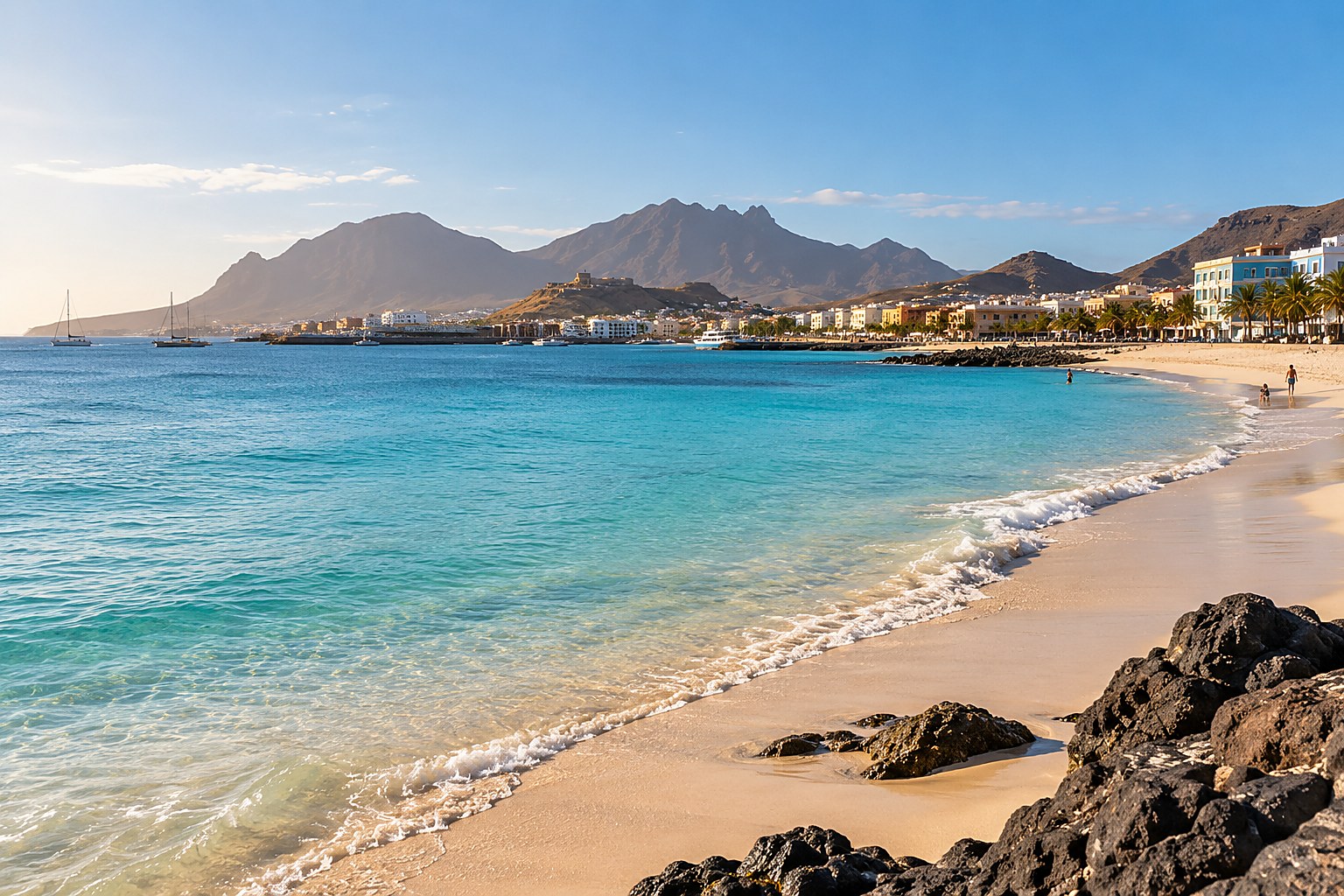
Thinking about São Nicolau & Brava?
Tell us what draws you, and we will build a route around it — with honest advice on connections, timing and how many islands are actually worth attempting.