

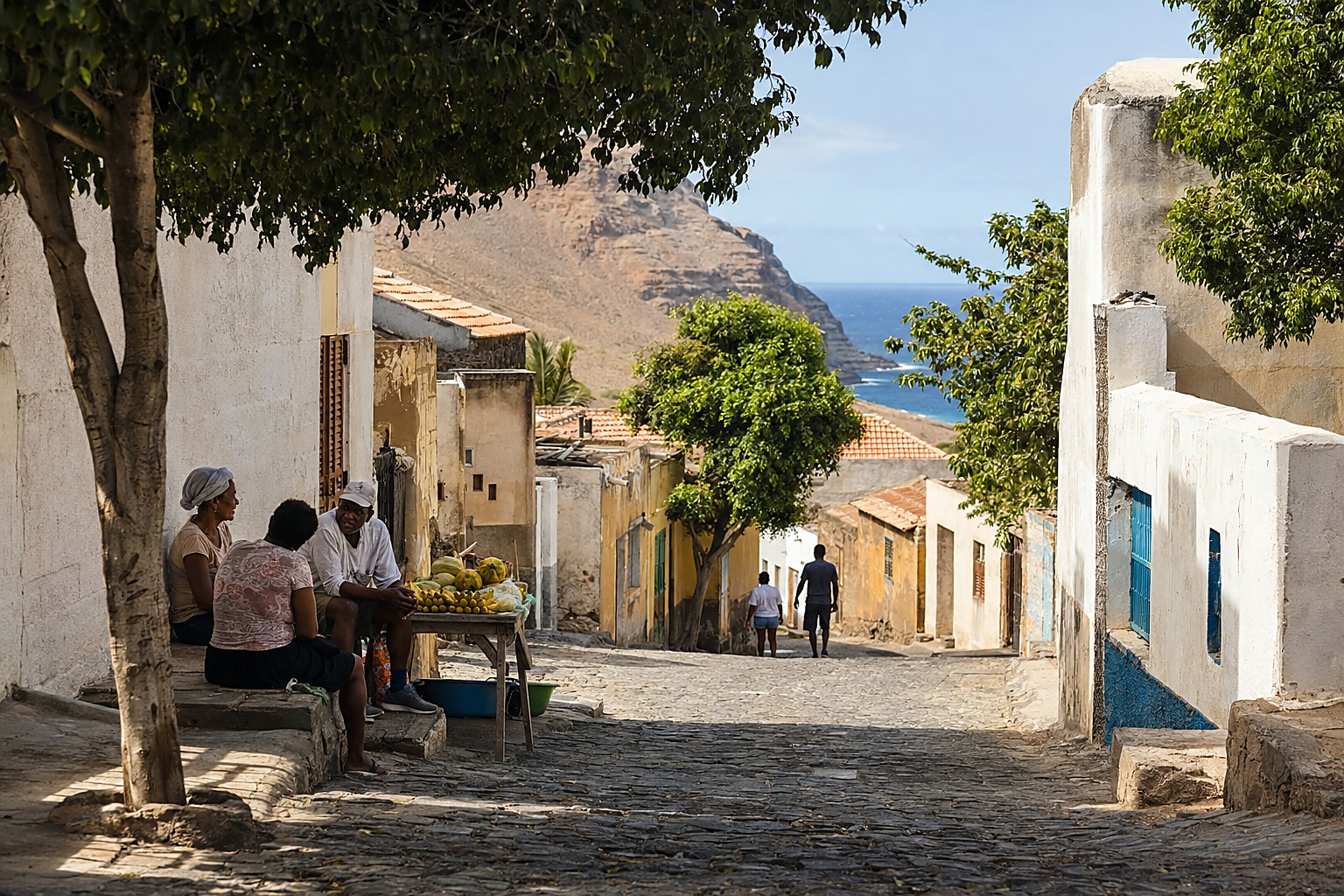
History & Local Life
Santiago
Discover Praia, African-influenced markets, mountain communities and historic Cidade Velha.
Santiago is the largest island and the country's centre of gravity. It holds Praia, the capital, more than half of Cape Verde's population, and the place where European settlement in the tropics first took organised form. It is also mountainous, agricultural and musically rich, with a coastline that changes character entirely between south and north. No island gives a fuller sense of what Cape Verde is, or of how it came to be.
Why go
What the island actually offers
Praia's Plateau — the old town on its flat-topped rise — remains the centre of the city, with markets, institutions and a street life worth several unhurried hours. West of the capital, Cidade Velha was the first European colonial settlement in the tropics, and for a period a hub of the transatlantic slave trade; it was inscribed on the UNESCO World Heritage List in 2009. Inland, the road climbs through farmland towards Serra Malagueta, and the north coast at Tarrafal is a different island again.
Signature experiences
Four ways we would shape your days
- Spend a morning in the markets and streets of Praia's Plateau.
- Visit Cidade Velha with a guide who sets out its history properly.
- Cross the interior through farmland towards Serra Malagueta.
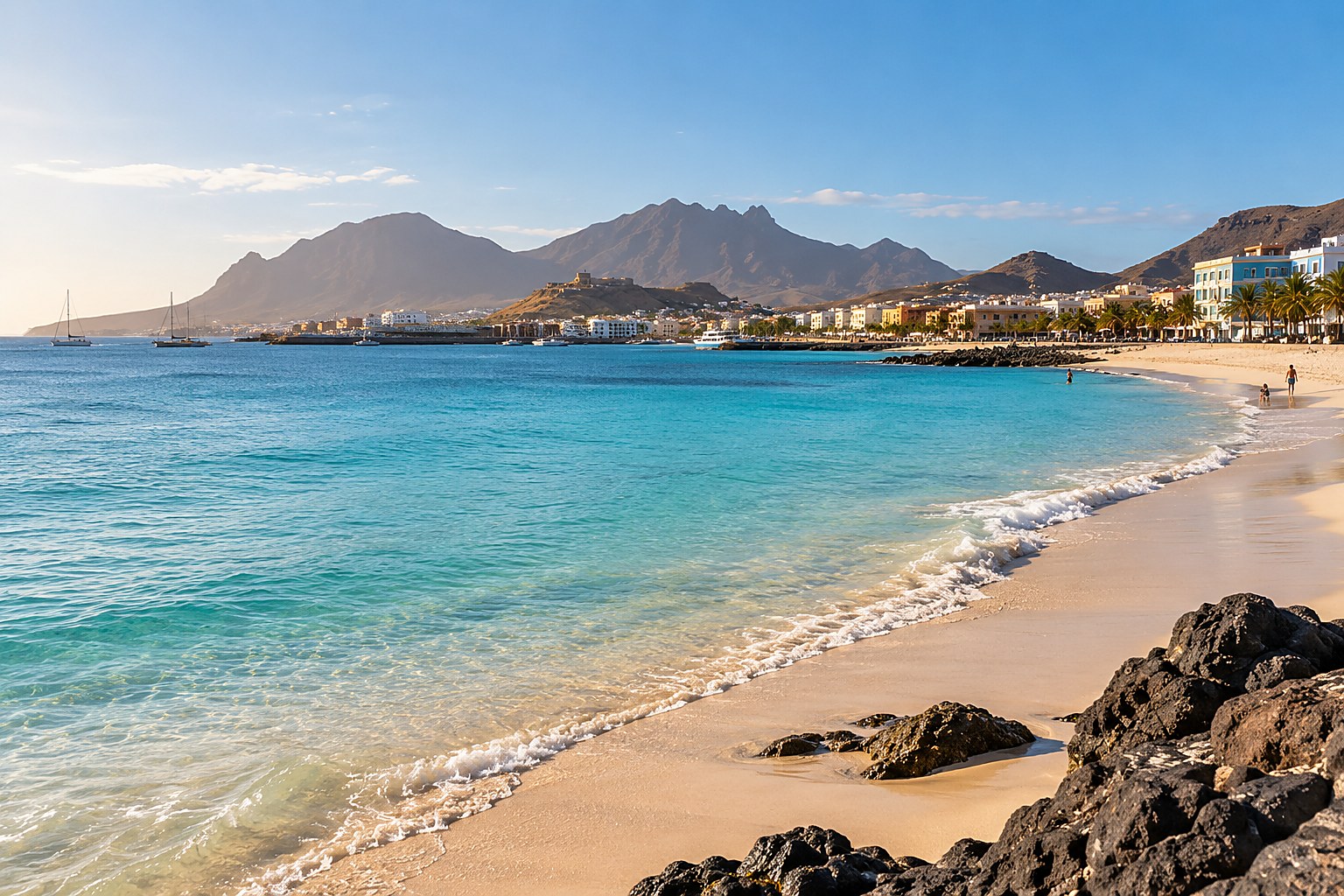
- Continue north to the bay at Tarrafal.
The Atlas & Aura perspective
Cidade Velha is not a scenic stop. It is the site of the first European colonial settlement in the tropics, and its wealth was built on the enslavement and trafficking of African people; the pillory still standing in the square is part of that record. We work with guides who explain it clearly and without euphemism, and we leave enough time for it to be understood rather than simply photographed.
Thinking about Santiago?
Tell us what draws you, and we will build a route around it — with honest advice on connections, timing and how many islands are actually worth attempting.